Biohazard Cleanup in Vandenberg Village
Biohazard cleanup in Vandenberg Village and surrounding areas. Insurance billing accepted. Call (805) 345-7440.
Some situations don’t wait for a convenient time, and some scenes can’t be left for a general cleaning crew. When a home or property has been exposed to blood, bodily fluids, infectious material, or sharps, the risk doesn’t end when the visible mess is gone, pathogens can survive on porous surfaces for days, and improper handling creates liability for everyone who enters afterward. Biohazard remediation is a regulated discipline, and the difference between doing it right and doing it fast is measured in health outcomes, not just appearances.
What biohazard cleanup actually involves
Biohazard cleanup is not housecleaning with stronger chemicals. It requires personal protective equipment rated for bloodborne pathogen exposure, EPA-registered hospital-grade disinfectants, and a documented chain of custody for every bag of regulated waste that leaves the property. Depending on the situation, an unattended death, a trauma scene, a hoarding environment with sharps, or a vehicle or commercial space with infectious material contamination, the affected area may need to be isolated before any work begins.
Materials that cannot be decontaminated to a verifiable standard are removed and disposed of through a licensed medical waste carrier, not placed in a standard dumpster. Porous materials like carpet padding, subflooring, drywall, and upholstered furniture frequently require removal. After physical removal, surfaces are treated with enzymatic cleaners that break down organic matter at a molecular level, followed by an EPA-registered disinfectant appropriate to the specific pathogen risk. The process ends with documentation, a written waste manifest and a completion report that your insurance carrier can use during claim review.
Timeline varies by scope. A single-room cleanup with limited surface contact may be completed in a few hours. A multi-room loss involving porous building materials can run one to three days, with additional time if reconstruction is needed afterward.
Our process
-
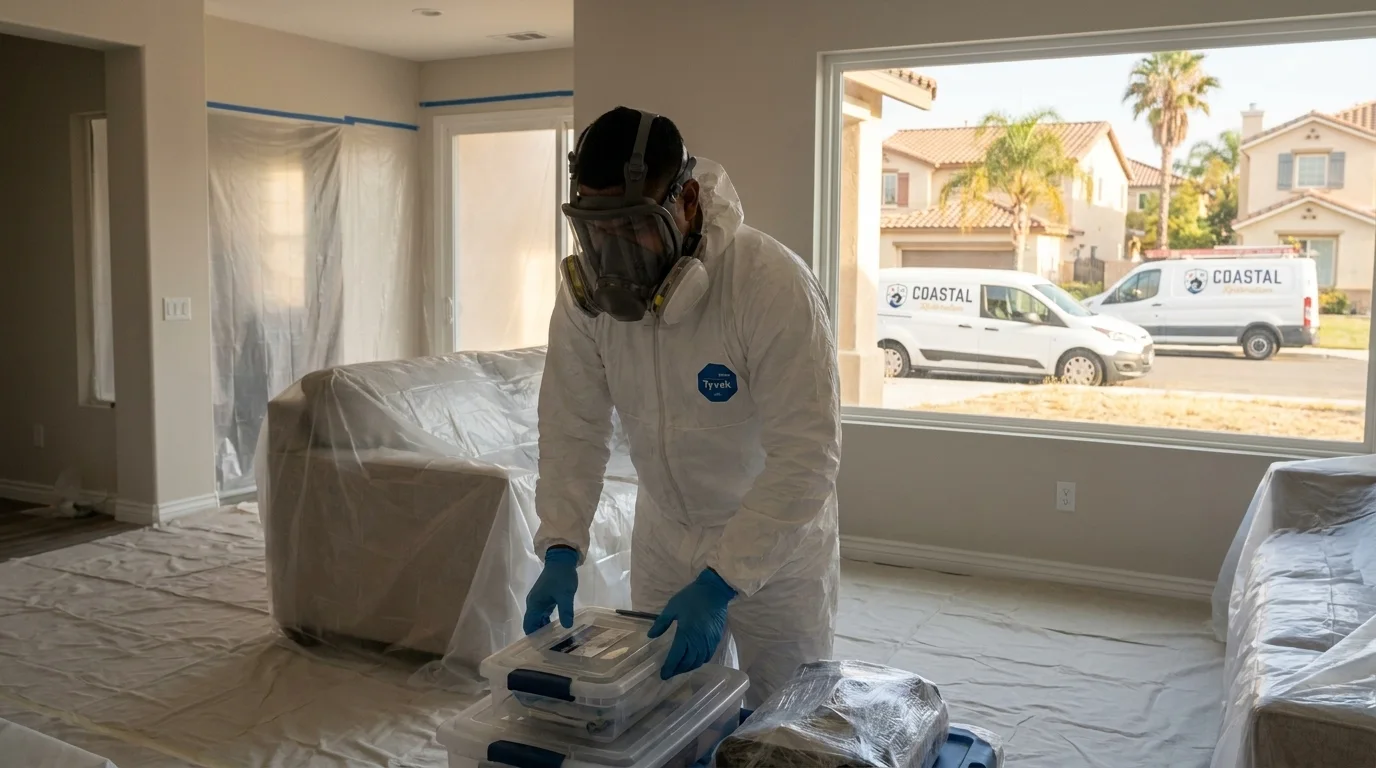
PPE staging and site assessment. Before anyone enters the affected area, the team suits up in appropriate personal protective equipment, Tyvek suits, respirators, and gloves rated for bloodborne pathogen exposure, and evaluates the full extent of contamination, including areas that may not be immediately visible (wall cavities, HVAC returns, adjacent rooms).
-
Containment and access control. The work area is isolated from the rest of the property using physical barriers and negative air pressure where indicated. This protects unaffected areas and limits cross-contamination during removal.
-
Biohazardous material removal. All contaminated materials, soft goods, flooring, drywall, sharps containers, and other items that cannot be decontaminated, are double-bagged in red biohazard bags, labeled per DOT regulations, and staged for transport by a licensed medical waste carrier. Nothing regulated leaves the property in unmarked bags.
-
Enzymatic treatment and EPA-registered disinfection. Hard surfaces and any remaining structural elements are treated first with an enzymatic cleaner to break down organic residue, then with a hospital-grade disinfectant. Contact times are observed, not rushed, to meet the kill claims on the product label.
-
Waste manifest and documentation package. Every job closes with a written waste manifest tracking disposal of regulated materials, photographs of the remediated area, and a completion report. This documentation is what insurance adjusters and, in some cases, future property transactions require.
What separates a good biohazard response from a bad one
The most common failure in biohazard cleanup is incomplete removal, treating visible surfaces while leaving contaminated material behind walls, under flooring, or inside HVAC systems. Pathogens and odor-causing organic compounds don’t respect the edges of what’s visible. A crew that skips moisture mapping and fluorescent testing before calling a job complete is leaving a problem behind.
A second failure point is waste handling. Regulated biohazardous waste must be transported by a carrier licensed for medical waste under California law. Disposal in standard construction dumpsters is illegal and creates liability for the property owner. Reputable operators provide a waste manifest, if a company can’t produce one, the waste wasn’t handled correctly.
Insurance adjusters reviewing biohazard claims look for itemized documentation: what was removed, what was treated, what products were used and at what dilution, and how waste was disposed of. A completion report without this detail is often insufficient for full claim reimbursement. Thorough documentation protects the homeowner, not just the contractor.
Discretion is also part of a professional response. Unmarked vehicles, plain-clothes staging where possible, and direct communication only with the authorized contact are standard practice, not extras.
What does biohazard cleanup cost?
Typical costs for biohazard remediation vary significantly based on the size of the affected area, the type and volume of contaminated materials, and whether structural components require removal. Most losses fall somewhere in the ranges below, these are industry-typical figures, not quotes from Coastal Restoration Services Inc.
| Scenario | Typical range |
|---|---|
| Single room, limited surface contact | $1,500 – $4,000 |
| Unattended death, single room | $3,000 – $8,000 |
| Multi-room trauma or infectious contamination | $5,000 – $15,000+ |
| Vehicle biohazard remediation | $500 – $2,500 |
| Sharps and needle cleanup (residential) | $400 – $1,500 |
| Hoarding environment with biohazard elements | $3,000 – $20,000+ |
Every loss is different. Coastal Restoration Services Inc provides a written scope of work before any remediation begins so there are no surprises. Homeowners insurance frequently covers biohazard cleanup, particularly in cases involving traumatic events or unattended deaths, though coverage limits and deductibles vary by policy.
Service area
Coastal Restoration Services Inc is based in Vandenberg Village, CA and serves the surrounding Santa Barbara County communities including Lompoc, Santa Maria, Orcutt, Buellton, Solvang, and the broader Central Coast region. City-specific pages link back here for detailed service information.
When you’re ready to move forward, call (805) 345-7440 to speak with someone directly and begin discreet biohazard cleanup, we’ll walk you through what to expect before anyone arrives on-site.
Frequently Asked Questions
Does homeowners insurance cover biohazard cleanup?
What licenses are required to transport biohazard waste in California?
What surfaces and materials typically need to be removed versus cleaned in place?
How is privacy handled during a biohazard cleanup job?
What should I do — and not do — while waiting for the biohazard cleanup crew to arrive?
Looking for the best biohazard cleanup company in Santa Maria?
Coastal Restoration Services Inc provides licensed and insured biohazard cleanup in Santa Maria, CA and the surrounding area. Customers rate us 5.0 out of 5 stars across 29 Google reviews. We answer calls 24/7 — call (805) 345-7440 for immediate help.
Need Biohazard Cleanup now?
We respond 24/7 across Santa Maria and surrounding CA cities.
Related Coverage
- Our Restoration Services
- Contact Coastal Restoration Services Inc
- Biohazard Cleanup in Arroyo Grande
- Biohazard Cleanup in Atascadero
- Biohazard Cleanup in Avila Beach
- Biohazard Cleanup in Ballard
- Biohazard Cleanup in Blacklake
- Biohazard Cleanup in Buellton
- Biohazard Cleanup in Callender
- Biohazard Cleanup in Cambria
- Biohazard Cleanup in Edna
- Biohazard Cleanup in El Paso de Robles
- Biohazard Cleanup in Grover Beach
- Biohazard Cleanup in Guadalupe